- OUR ACCREDITATIONS


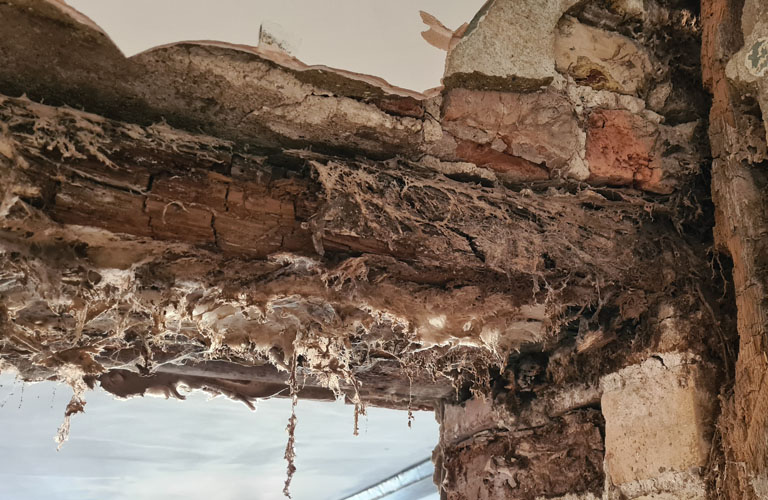


Dry rot is the term used for the most serious form of fungal decay, scientifically known as Serpula lacrymans. Unlike wet rot, dry rot can spread through masonry and timber alike, and weakens wood by leaving it brittle. This can cause major structural instability and in the most serious cases, it will cause sudden collapse.
With exposed timber, you will be able to tell if something is wrong – dry rot develops on the surface of the wood, so it is clear on beams and flooring. However it is not so clear for structural beams within walls or roofs.
Dry Rot Surveys
If you are moving into a property, be that your new home, renovation, or business – and you think you see signs of dry rot, contact our team to arrange a survey. Not only will a survey put your mind at rest, but they can also potential save you thousands of pounds by spotting and treating the issue quickly.
Once a dry rot survey has been carried out, our team will provide you with a quote for any further treatment.
Dry rot is mainly caused by high levels of moisture and due to its severity, requires immediate attention to forestall future problems. The fungus that dry rot causes digests the strongest parts of the wood, and can spread to other areas that are not affected by moisture.
Dry Rot Treatments
Dry rot treatment methods include:
- Removal of all affected materials up to 1 metre from the last visible signs of decay
- Curing the source of the dampness
- Plaster removed and brickwork sterilised with dry rot masonry biocide
- Remaining timber treated with a fungicidal and insecticidal spray or paste
- Replacement of affected timbers fully isolated from brickwork
The dry rot treatment required varies depending on the extent of the damage, the age of the property, and the severity of the fungus rot. Early diagnosis is key to keep costs and disturbance to your lifestyle to a minimum.
If you suspect you have dry rot, or need a survey for your property, we cover homes and businesses across Lincoln, Horncastle, Skegness and surrounding areas, don’t hesitate to contact our team.
Dry Rot FAQs
Who We Work With
We have established an industry reputation for quality, professionalism and reliability. We are the go to Damp Proofing Contractors for some of the largest names in the UK in sectors including Construction, Local Councils, Healthcare and Housing Associations. Here are a selection of our clients below;