
British Damp Proofing recently completed some work at Southwell, just outside Newark. It was an interesting site and nothing we had come across before. The building we were contracted to work on was the old House of Correction facility. The work we undertook included woodworm treatments and a chemical damp proof course to the entire building.

There is also another building on the site which we are going to be undertaking works at a later date as shown below.
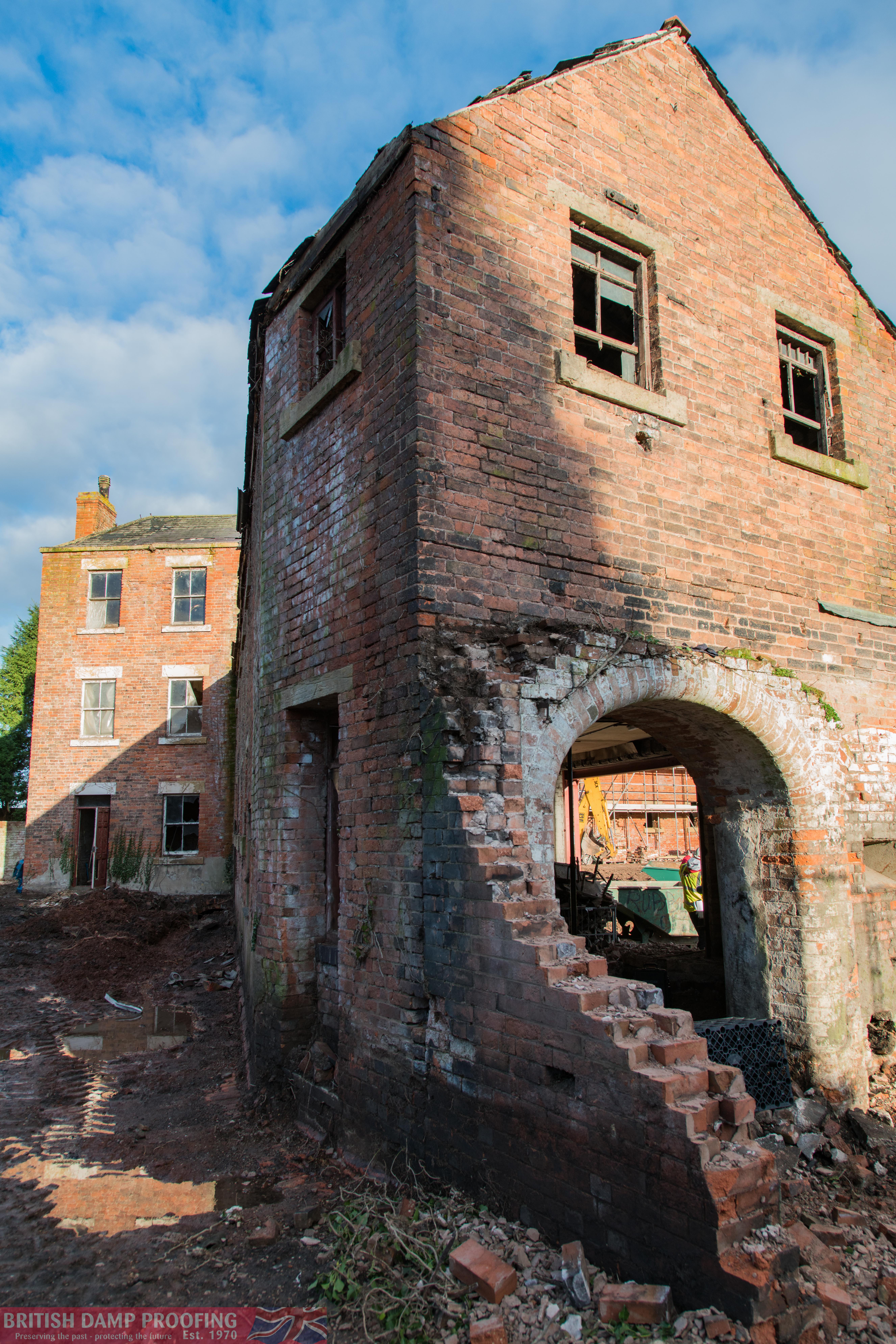
There had been an older house of correction since 1611 on the Burgage and it was situated 100 yards further up the road. Though they were originally intended to enforce the Poor Law by giving the idle and troublesome work, the Houses of Correction became more like prisons as they became places for punishing crimes.
This facility was built during 1807-08 and designed by the architect Richard Ingleman. The build cost at the time was only £2112. Using an online calculator site, £2112 in 1807 has an approximate value today of £135,751.
The prison housed both male and females but they were kept separate from one another. Each ward had its own exercise yard with a stone bench and water trough in which the prisoners could wash.
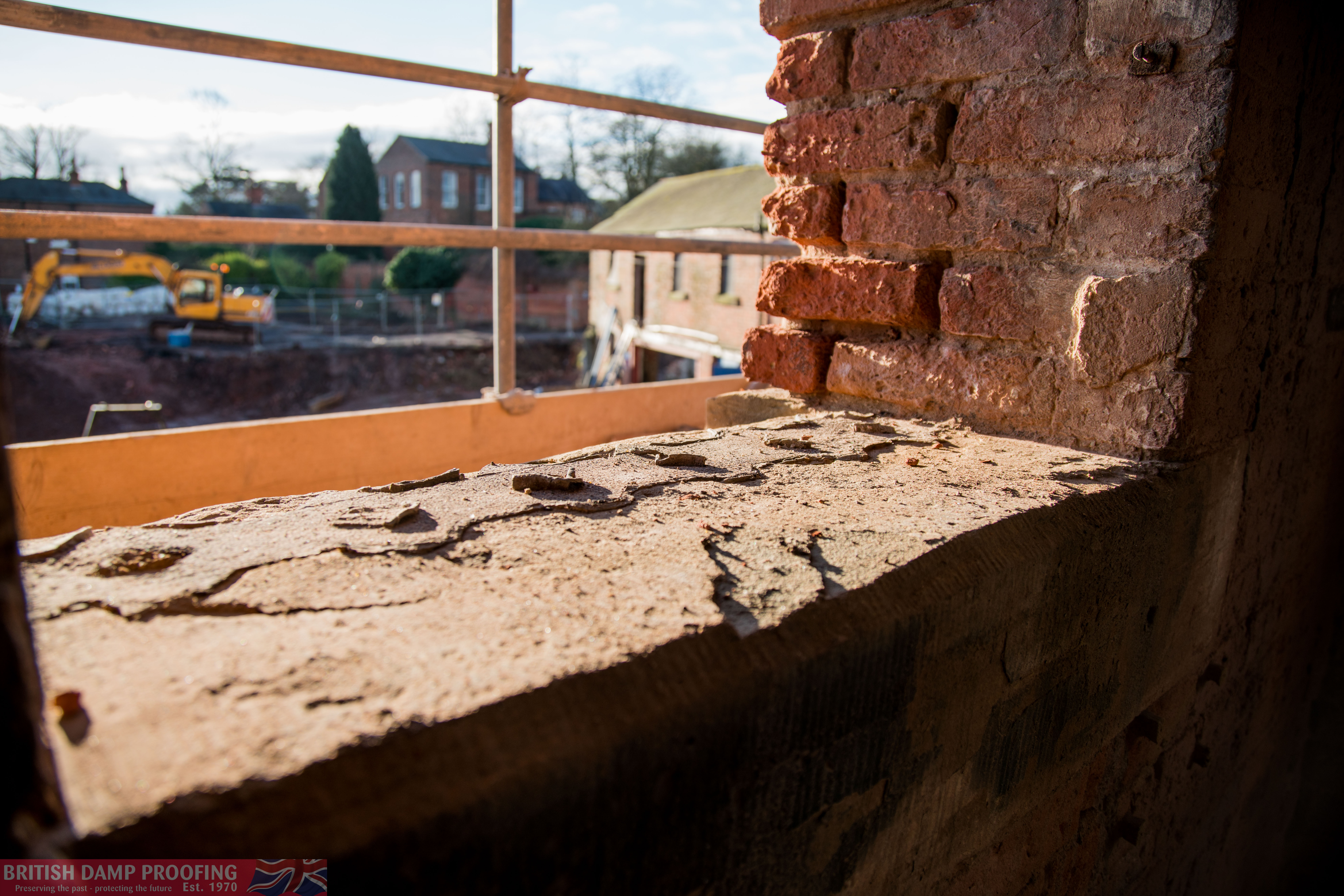
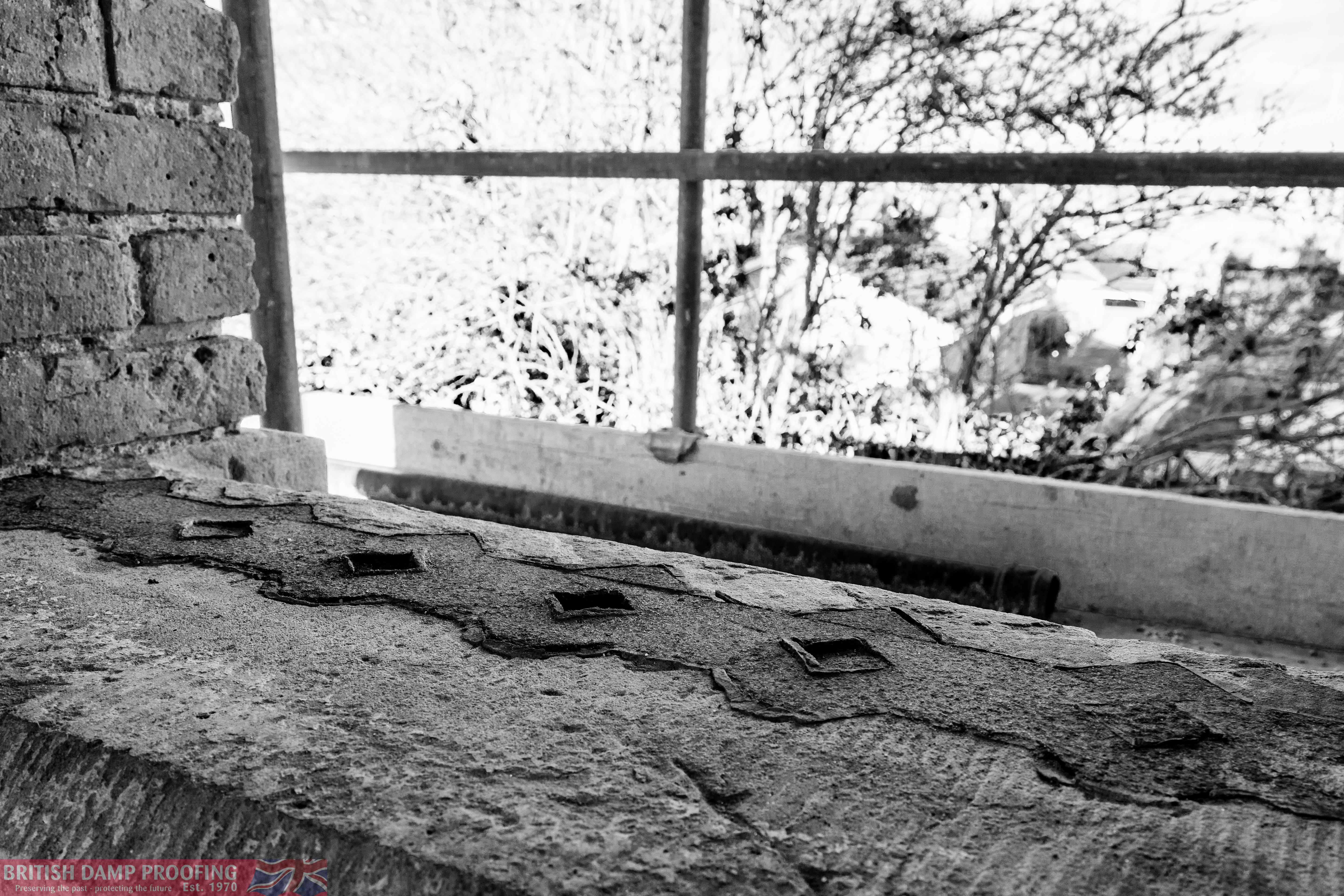
Below are a couple of pictures clearly showing the holes for where the prison windows bars would have been situated:
One of the earliest prisoners there was Lord Byron’s first valet, Frank Boyce, who was caught stealing silk stockings. He also bought a dud horse for the teenage Byron, keeping the change for himself. He was tried in Nottingham. A servant robbing his or her employer was considered a very serious crime of the time so he was sentenced to transportation. After serving his 14-year sentence he stayed in Australia and became a respected citizen.
The prison was only in use till 1880. After that, the site was occupied by Carey’s lace factory until 1956 and then taken over by the haulage company W.A. Rainbow and Sons, who have also moved on in recent years.
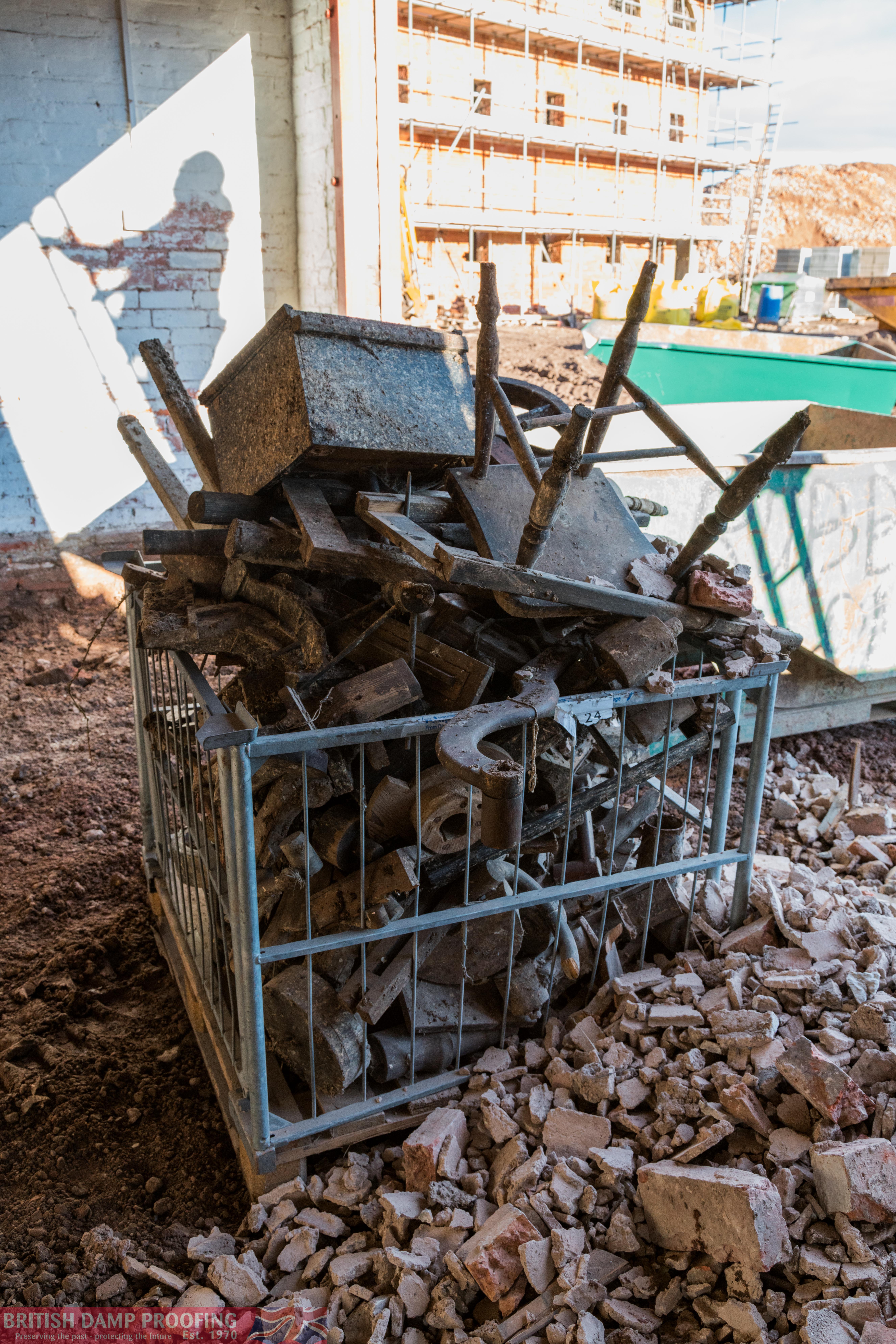
The contractors on site showed us their collection of things found throughout the development, which will be donated to a local museum.

Here at British Damp Proofing we are always fascinated with the variety of different projects we get to work on and are delighted to meet the people we get to work with. We feel very lucky to see the evidence of all this history first-hand and be able to help save and preserve some of these historic buildings. If you need any damp proofing treatments or want further information on any of our services or, contact a member of our friendly team today and find out how we can help you.
Sources:
https://www.southwellcouncil.com/council_news/bechers-walk/
http://www.ournottinghamshire.org.uk/page/the_house_of_correction_at_southwell
https://en.wikipedia.org/wiki/William_Fletcher_(valet)
Written By Matthew Mallows
