
Dehumidifiers are a popular purchase amongst homeowners, with many investing in these units as their first line of defence against damp.
Typically, a standard dehumidifier can cost you around £200-£400 for a unit. At this price, homeowners tend to believe that, if they turn it on and keep it running, then the damp issue will be fixed with no further issues.
However in some cases, while a dehumidifier can seem to be working – collecting water and reducing the feeling of moisture in the air – you’ll often see that the damp returns and persists.
This is because, while the machine is doing its job correctly, a dehumidifier can’t successfully fix all damp issues.
In this article, British Damp Proofing’s expert team have shared their expert guidance, to help you understand exactly why your dehumidifier isn’t fixing your damp problem.
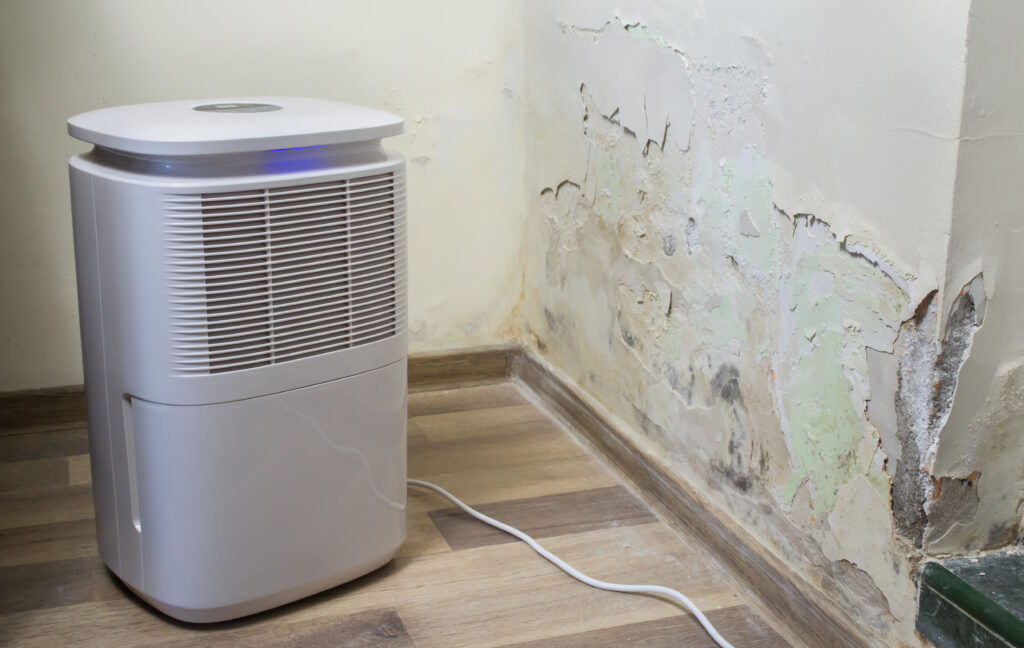
What does a dehumidifier actually do?
A dehumidifier is designed to remove moisture from the air. They take in humid air, condense the moisture in the air (into water), release drier air into the room, and then the water can be emptied by the user.
While many models do this extremely effectively, this is all that they can do.
So, dehumidifiers can reduce indoor humidity levels, but they can’t tackle moisture that is present inside walls, floors or the property’s structural materials.
Furthermore, if damp and moisture are continuously entering the property, then a dehumidifier can only tackle the symptom of the issue – Not the root cause.
This is why, in many cases, the fix that dehumidifiers provide is only temporary.
The 3 types of damp
There are three main types of damp that affect UK homes:
- Condensation damp – Occurs when warm and moist air meets cold surfaces (e.g. windows and external walls). This causes water to form.
- Penetrating damp – Caused by water entering through faults in the building’s structure (e.g. damaged brickwork, leaking gutters, or issues with the roof).
- Rising damp – Caused by moisture travelling up through the property’s walls, from the ground. This is as a result of failed (or absent) damp-proof courses.
In the cases of penetrating or rising damp, these can’t be treated with a dehumidifier, as they are caused by structural issues within the property.
Whereas with condensation damp, this issue can be treated with a dehumidifier, because these units remove excess humidity from the air (thereby directly tackling the cause of the problem).
In short, there is a fundamental difference between managing moisture in the air versus addressing moisture in the structure.
The cost of using dehumidifiers
It’s also important to note that, while dehumidifiers are often seen as a low-cost solution, if you’re running them continuously, then they can start to get expensive.
In fact, running a standard domestic dehumidifier 24/7 can cost around £150-£300 per year.
As you can imagine, over a number of years, this plus the cost of the unit itself can soon build up – especially if the dehumidifier isn’t actually treating the root cause of the issue, either.
Is my dehumidifier hiding a bigger problem?
Firstly, you will need to determine what type of damp is present in your property, and whether the damp is being caused by structural or atmospheric issues.
There are several clear indicators that the damp is being caused by a structural issue.
These include:
- Visible tide marks on your walls
- White powdery salt deposits (forming on the plaster or brickwork)
- Peeling or bubbling paint (particularly near skirting boards)
- The walls being cold or visibly damp
- Localised patches of persistent damp (as opposed to a general humidity in the room)
If you attempt to use a dehumidifier in a property where these signs are present, then it’s likely that your dehumidifier is hiding a bigger, much more significant damp issue.
However, there are some instances where dehumidifiers can provide a great, convenient and effective solution.
Dehumidifiers can be used to:
- Support condensation control in well-insulated properties
- Dry out a room (e.g. after a minor leak has been repaired)
- Aid ventilation (especially if ventilation is otherwise poor, e.g. there is only a small window)
- Support short-term moisture reduction (e.g. during refurbishment projects)
If you think a bigger damp problem may be present in your home, early professional diagnosis can save you significant money and stress in the long-term.
Enlisting the assistance of a damp treatment specialist can ensure these issues are addressed quickly, precisely and thoroughly, providing a dependable solution for the long term. This is far more effective than years of dehumidifier dependency.
At British Damp Proofing, we support countless property owners across the country. To learn more about how we can protect your home against the risk of damp, don’t hesitate to get in touch.